Open source · 2026
AI Form Assistant
Answer out loud. The form fills itself.
A form you fill by talking instead of typing. Answer in your own words, by voice or text, and the fields fill in as you go: an open-source starting point for anyone whose signup or intake form loses people halfway.
- Role
- Solo build
- Scope
- Demo and reference implementation
- Status
- Open source, MIT licensed








01
Inside the build
Two demos
The form builder
Add fields, pick types, set validation rules. The result is a JSON schema kept in localStorage, so a new form takes no code.
Filling it by conversation
The assistant asks, you answer however you like, and the fields update while you talk.
How the conversation writes to the form
Gemini 2.5 Flash runs the chat: fast and cheap enough to keep a back-and-forth conversation going. It sits behind the Vercel AI SDK, so swapping the model leaves the form code untouched.
Field updates happen through tool calls, not through parsing the model's prose. Each call carries a field name and a value, checked against the same Zod schema React Hook Form validates on. One sentence can fire several of those calls at once, which is how "my name is John Doe" reaches firstName and lastName in a single turn. When a value fails validation the assistant is told which field and why, so it asks again instead of dropping the answer.
Twelve field types ship with matching validation: text, textarea, email, phone, URL, number, date, time, checkbox, single choice, multiple choice, and a range slider.
Voice on both ends
Speech-to-text is the browser's SpeechRecognition API. In Chromium it runs on the device: no audio upload, no per-minute cost, works offline. Spoken output goes to OpenAI TTS-1 and plays back automatically, so the form can be finished without looking at the screen. That matters most on mobile, where forms hurt the most.
Where it fits
Structuring messy input
Paste a resume or a block of notes, watch the fields populate, correct whatever is wrong.
Long multi-step forms
Answer questions instead of clicking through steps and back again.
Mobile
Talking beats typing on a phone keyboard, by a wide margin.
Hands-free entry
Voice in, voice out: a whole form completed without touching the device.
Beyond form filling
The system prompt and tools live in src/app/api/chat/route.ts. Edit those and the same conversation loop does other jobs: guiding someone toward a purchase while they fill the form, explaining what an option means before they pick it, suggesting a value from an earlier answer, or chaining several forms and showing fields only when they become relevant.
Stack
Next.js 16 with the App Router, TypeScript throughout, shadcn/ui and Tailwind for the interface. React Hook Form holds form state, Zod owns validation and the inferred types, and the schema persists in localStorage.
Open source
MIT licensed, on GitHub.
One caveat worth stating plainly: this is a demo and teaching repo. Field updates are applied client-side. In a product you are charging for, the write goes to the server first, where it can be validated and stored without trusting the browser.
02
Related work
Telegram Claude + Codex: Remote Coding Agents via Telegram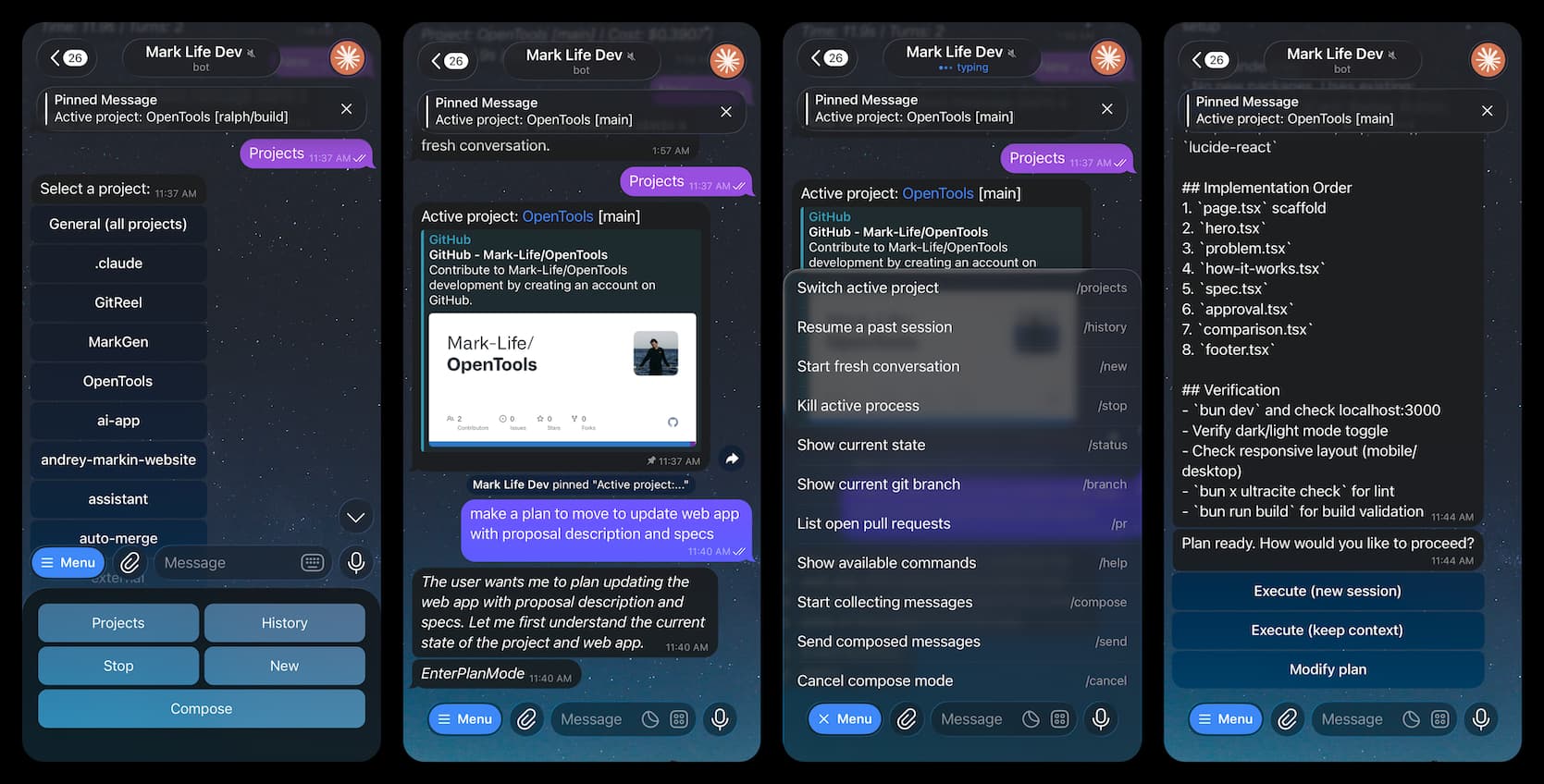
Telegram Claude + Codex: Remote Coding Agents via Telegram
A Telegram bot that runs coding agents on your own server from your phone. Send a message, watch the work stream back into the chat, and approve the plan with a button: no terminal, no SSH.
TypeScriptBunTelegram BotClaude CodeOpenAI CodexAIgrammyGroq
View Project
oRPC-to-WebMCP Bridge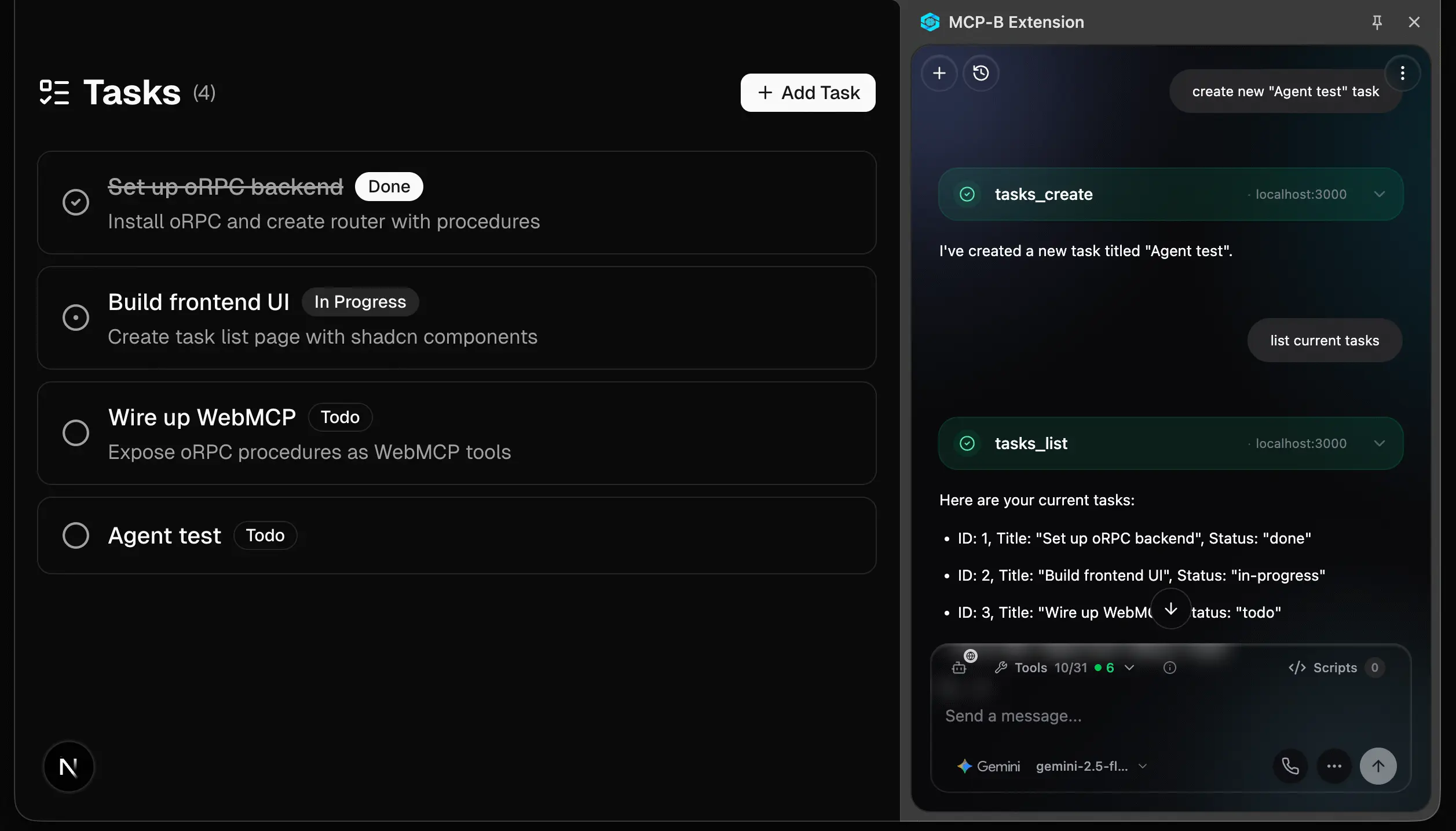
oRPC-to-WebMCP Bridge
One package that hands a web app's own features to the AI assistant running in the browser. Built in the open as a working reference for WebMCP, the draft browser API for AI tools.
Next.jsoRPCWebMCPTypeScriptZodshadcn/ui
View Project
Outrizz AI: Event Engagement Platform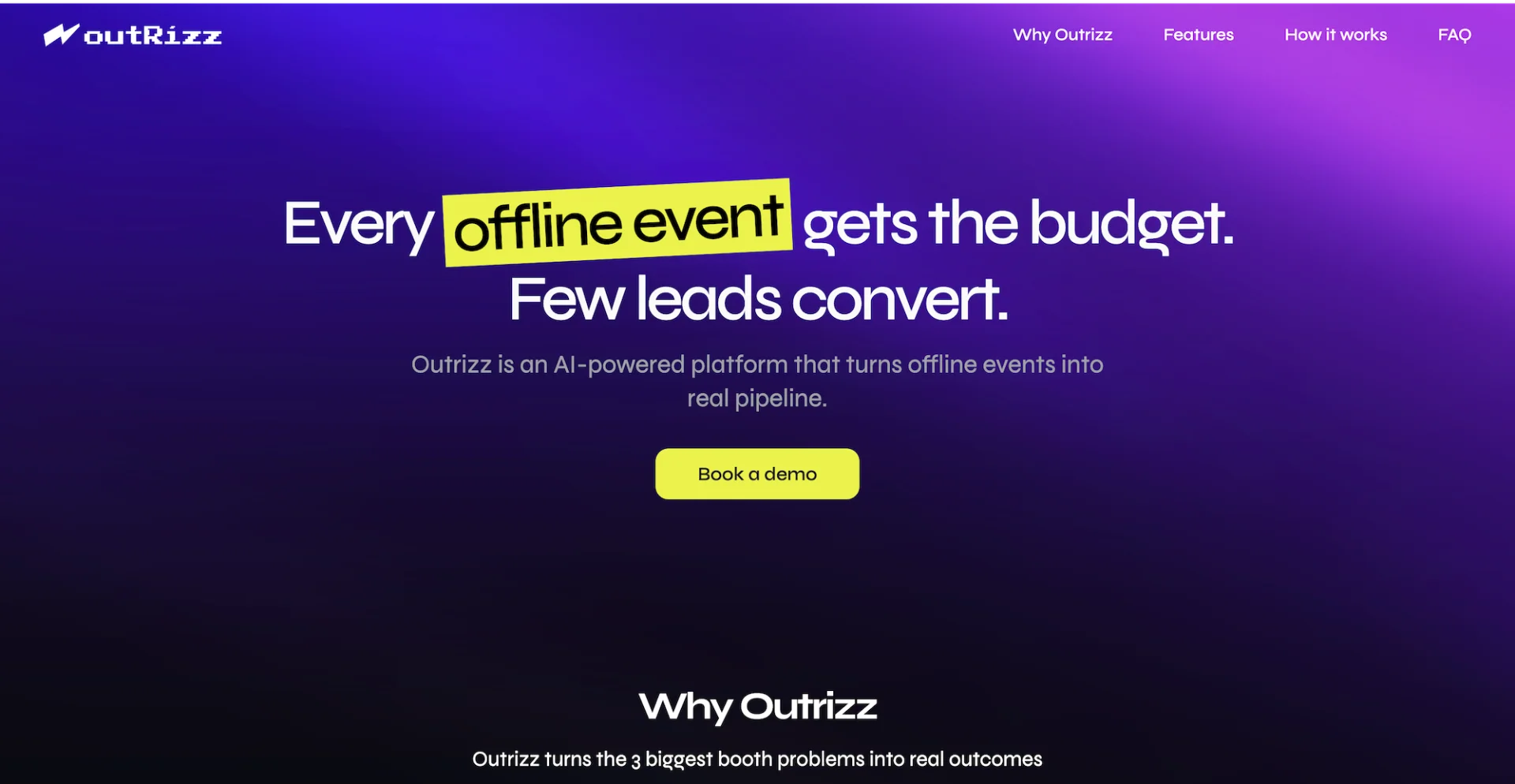
30K+leads generated
Outrizz AI: Event Engagement Platform
An event marketing platform for B2B sales teams. It finds the right people before a trade show and talks them into coming, then captures everyone who stops at the booth and follows them up while the event is still running.
Next.jsReact NativeAItRPCTurbo MonorepoDrizzleSupabase
View Project
Want your form to talk to customers?
Fork the repo, or tell me what your intake process looks like and I'll build the version that holds a conversation with your customers and saves straight into your systems.
Book a free call30 minutes, free. You leave with a plan either way.