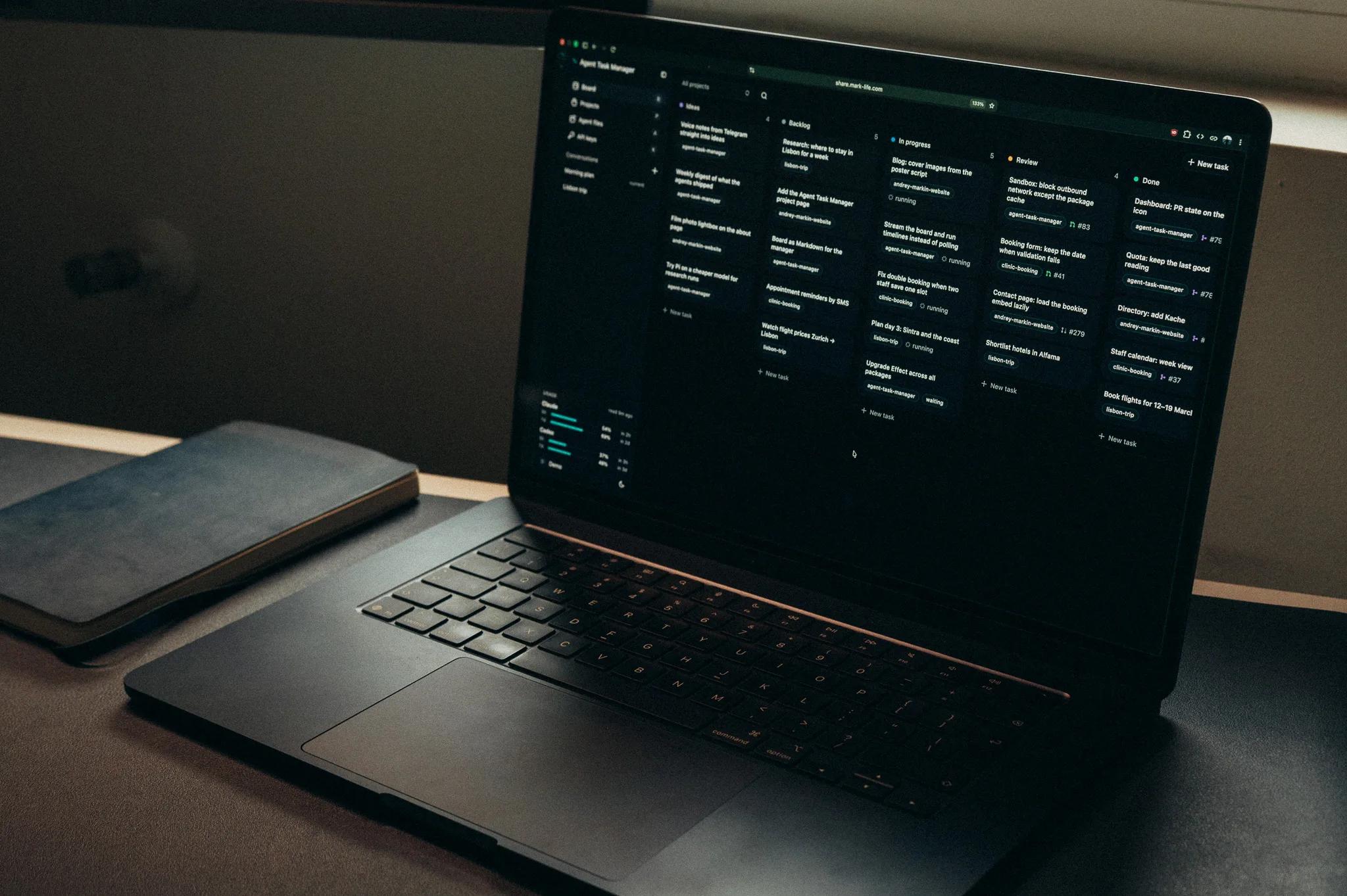
\ Personal software factory · Author · 2026 \
A board my agents work from
I move a card, an agent picks it up in its own container, and the result waits for me in review. A manager agent runs the board when I just say what I want.
Move a card, an agent starts
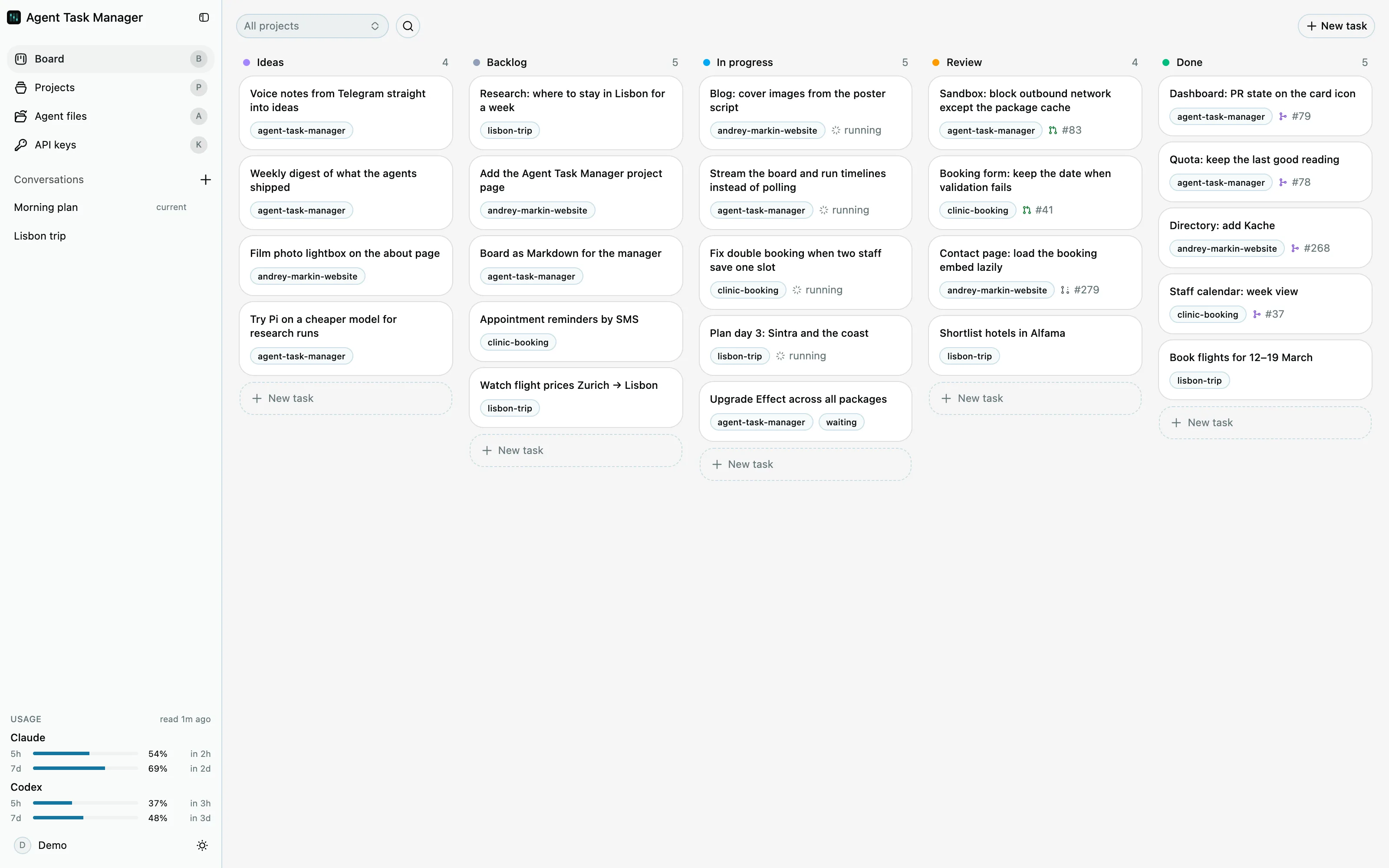
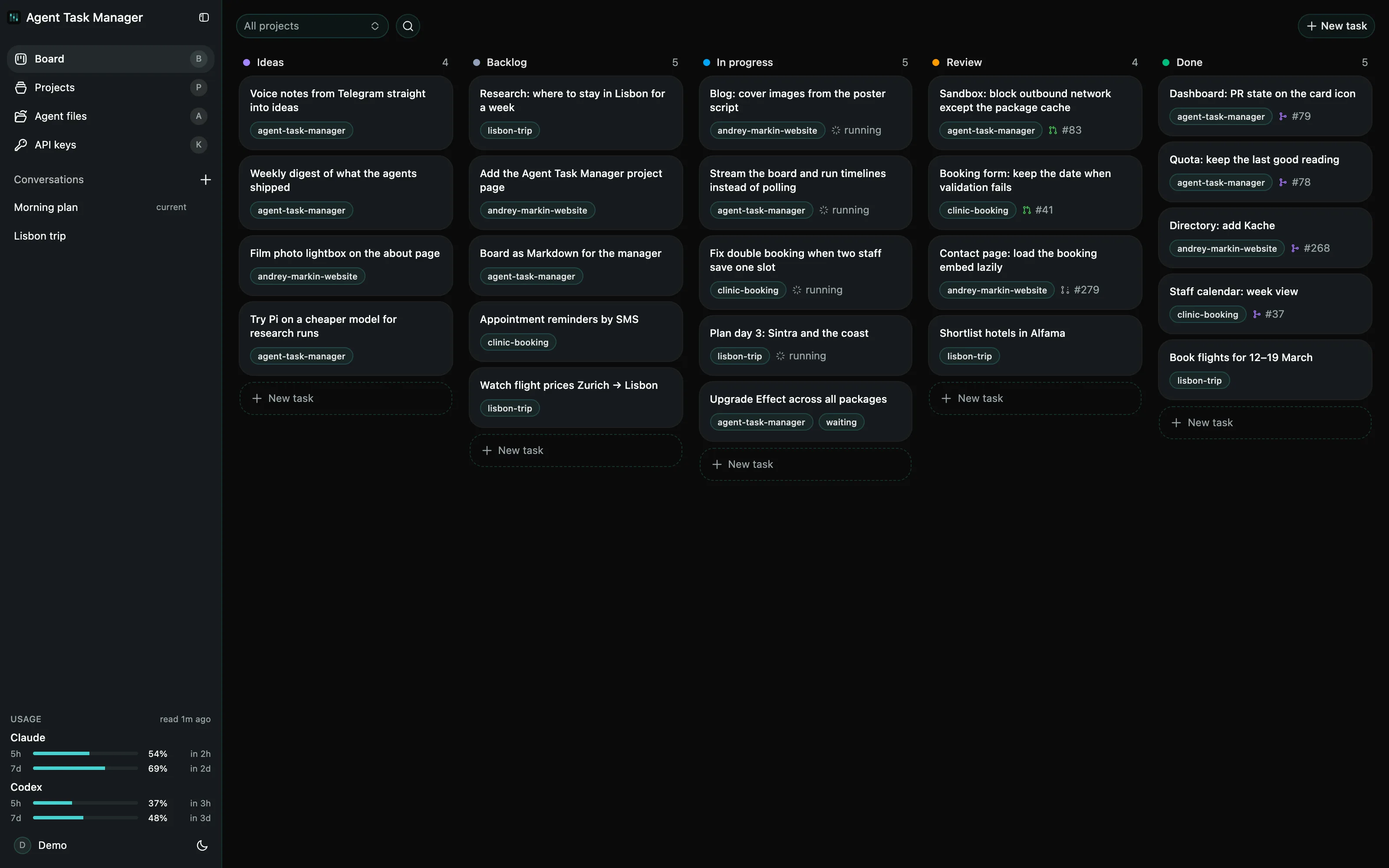
Five columns. Moving a card into in progress is the only button that starts an agent.
a task
ideas
Anything, in any shape. A voice note is fine.
backlog
A research agent can dig in first, on request.
in progress
Moving a card here starts a worker. No second click.
review
The run ended and left a PR, a document or a plan.
done
One container per run
The loop reads the column in rank order and starts what it has room for.
card → in progress
A Postgres trigger wakes the loop.
loop
Checks quota, takes a slot, leases the task.
container
A fresh one per run, torn down after.
- claude
- codex
- pi
review
A PR, a document or a plan to read.
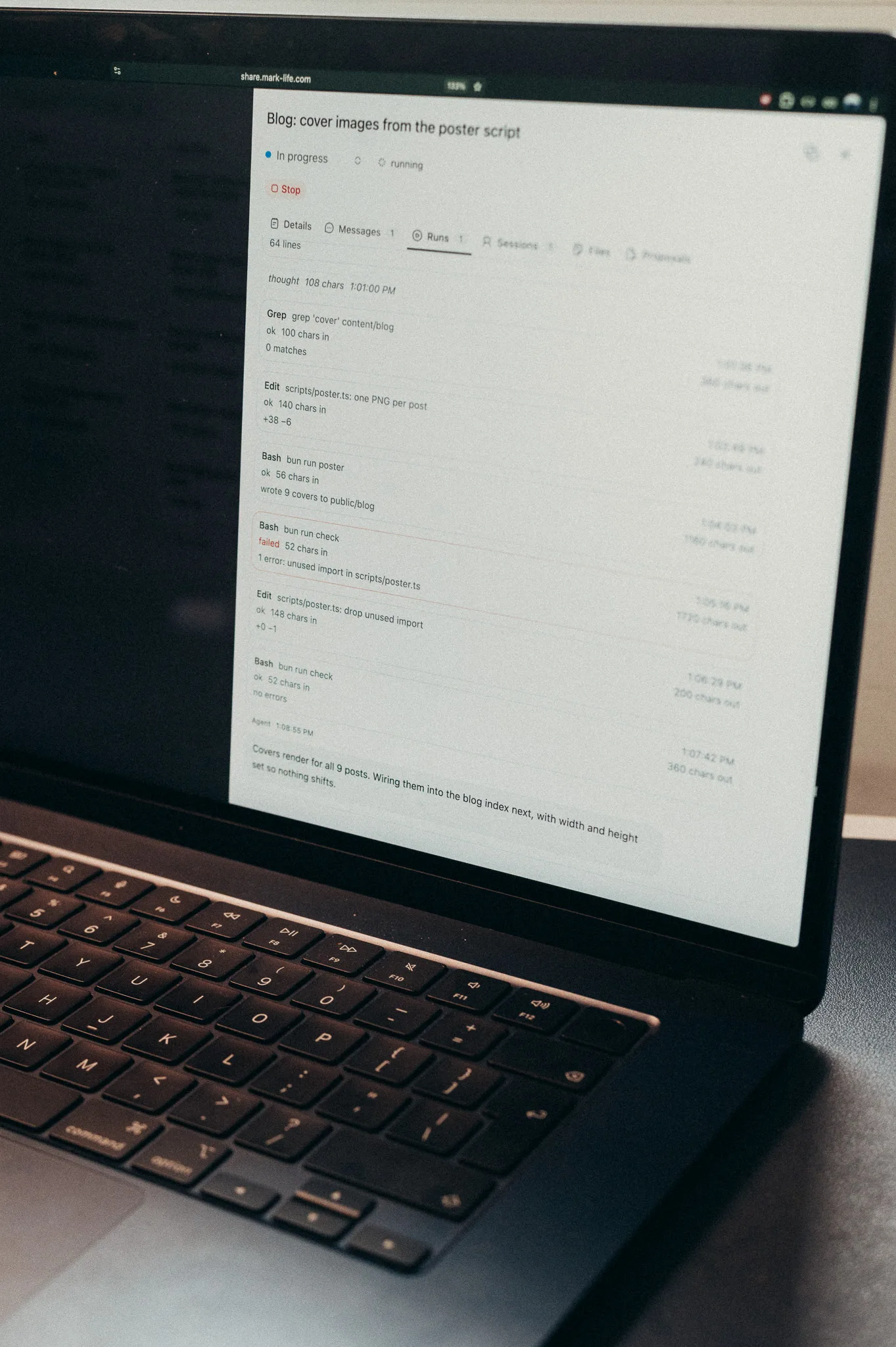
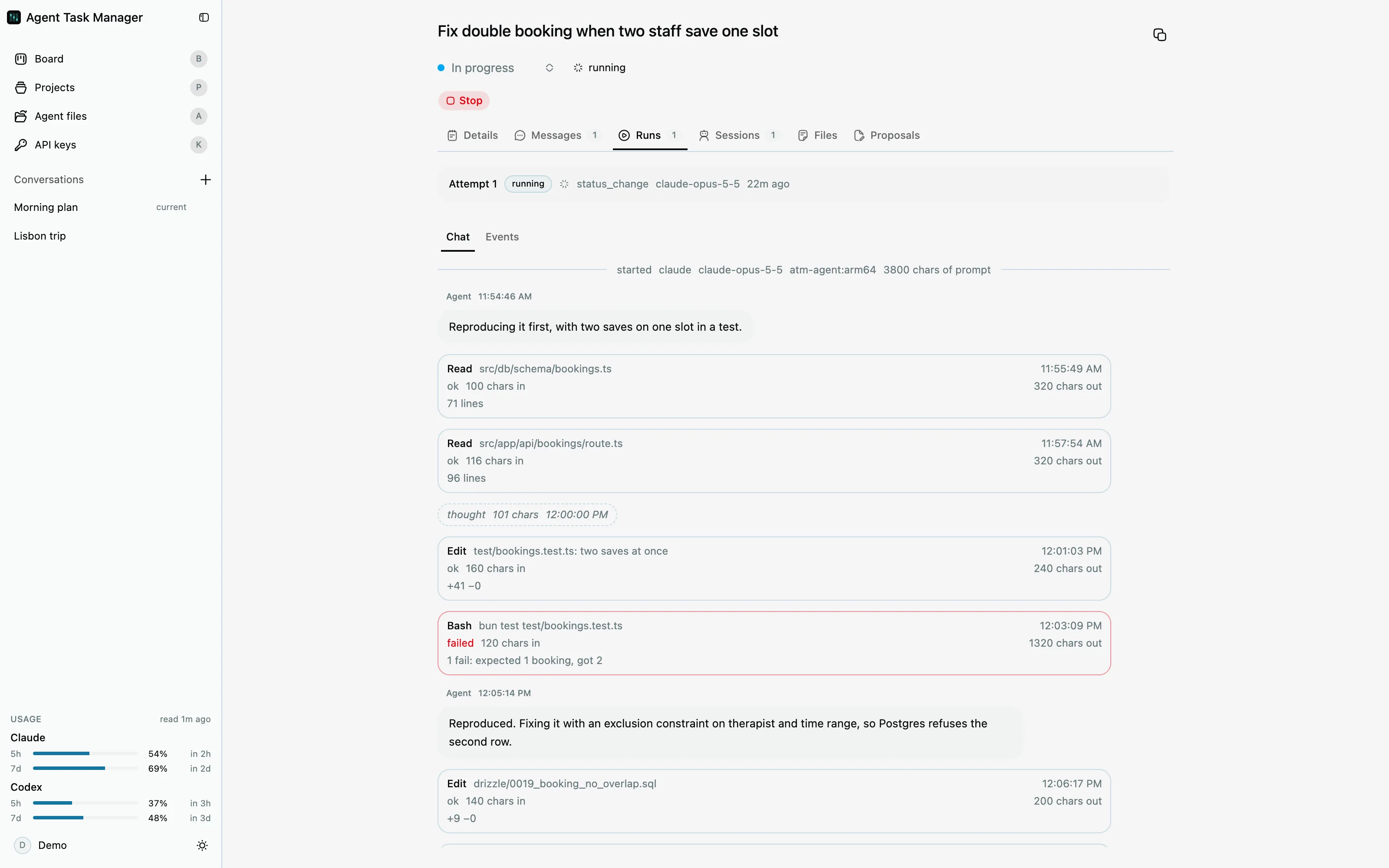
I watch it think, then step in.
Every run gets its own Docker container: the task's checkout, its notes, and the login of the agent it runs on. Never the Docker socket.
Claude, Codex and Pi sit behind one harness, so the loop picks a provider from the task and never knows which SDK it is.
Stop kills the run. Post a message, move the card back, and the same session resumes with what you said as its next prompt.
A manager I talk to
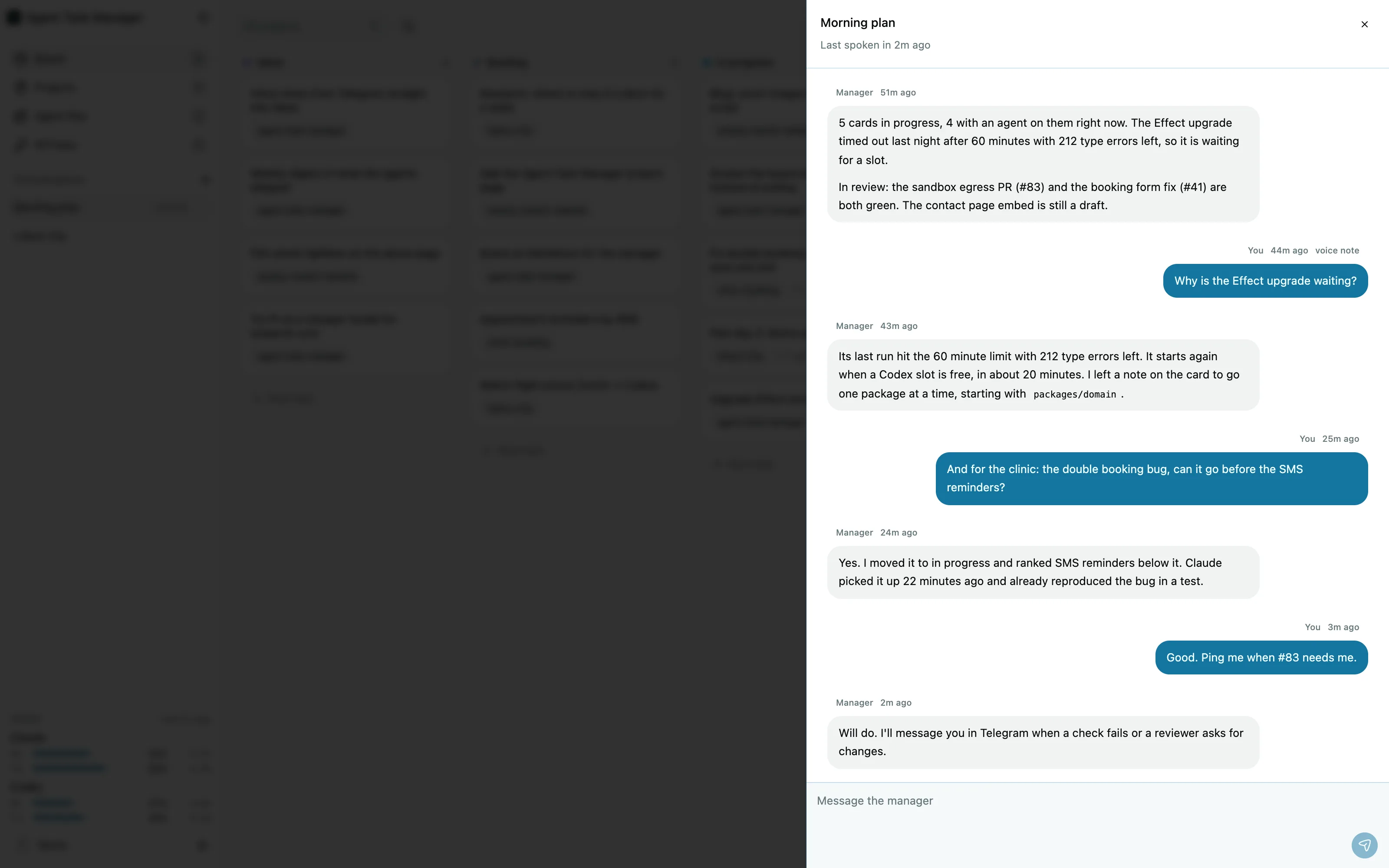
Most days I don't click the board. I tell the manager what I want.
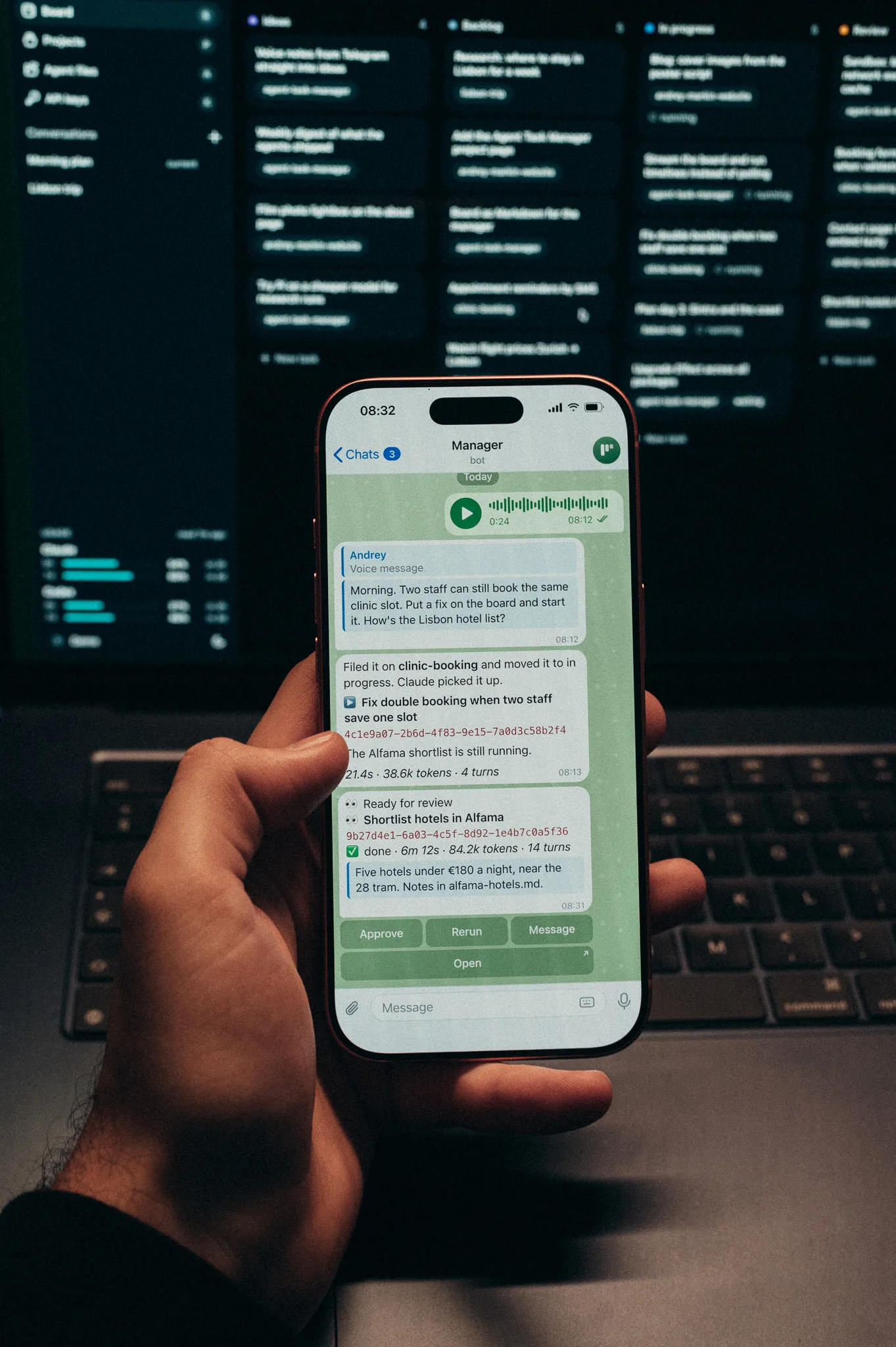
The manager is the same runtime with a different prompt. It can do anything I can do on the board: file a task, rank it, move it, read what a stuck worker did.
I talk to it from the dashboard or from Telegram. Voice notes get transcribed, forwards keep their sender, and it tells me when a task needs me.
Every run on record
Agents leave a trail. The rules make sure it is one I can read.
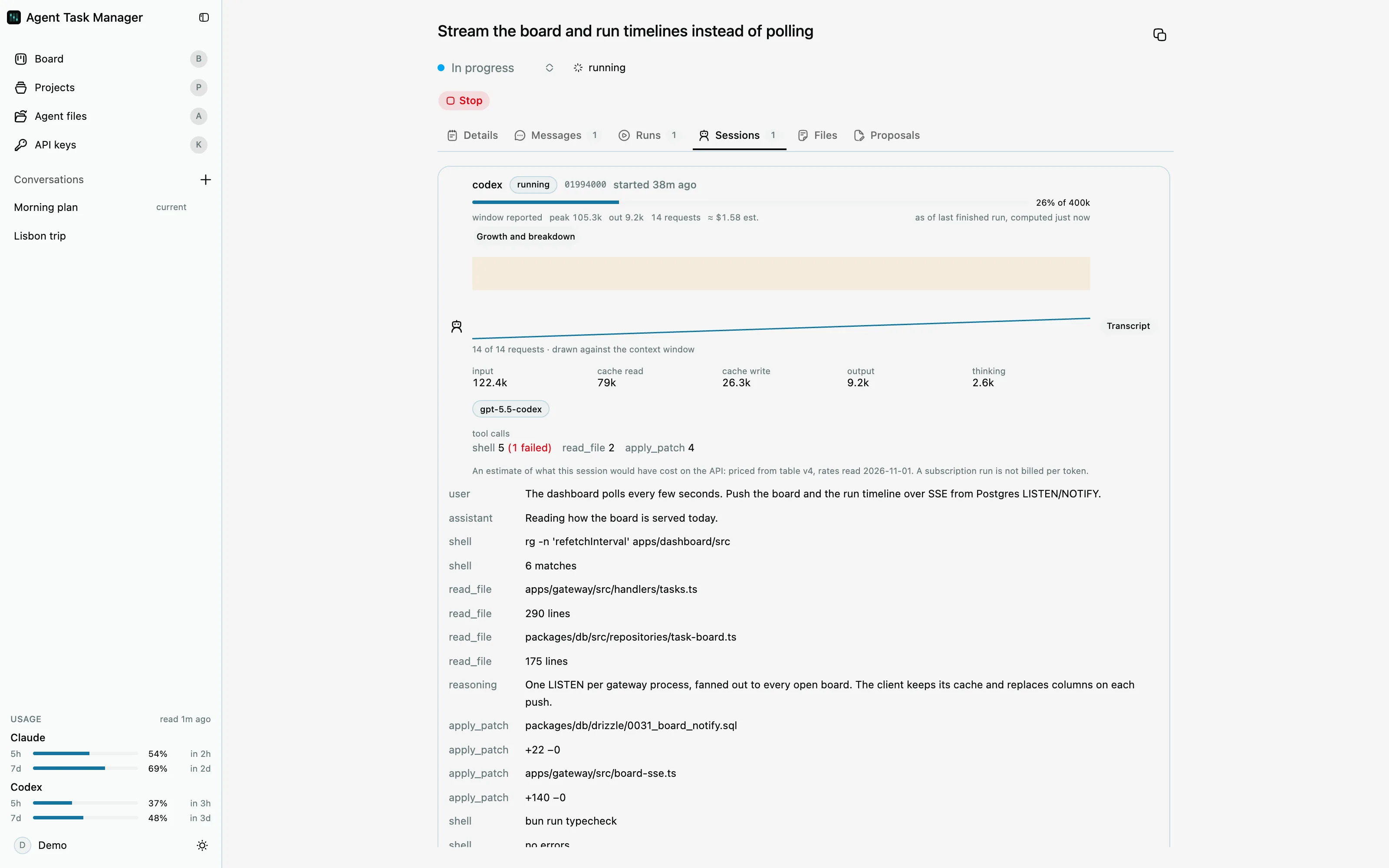
Transcripts are captured, not written. Each session shows its context, tokens, tool calls and what it would cost on the API.
Task messages are the short channel. An agent writes the one thing the next reader needs, and every message says which session wrote it.
quota gate
95%
The loop reads what is left on the Claude and Codex plans and holds a run past 95% of a window.
stop hook
1 retry
A worker that tries to stop without a note on its card is sent back once to write one.
review loop
2 sessions
A fresh session reviews the PR. The session that wrote it resumes with the review as its prompt.
the record
Every call
Each tool call and message lands in Postgres, live on the page and kept for later.
Not only code
Brief in, agent runs, something to review comes out. Code is one case.
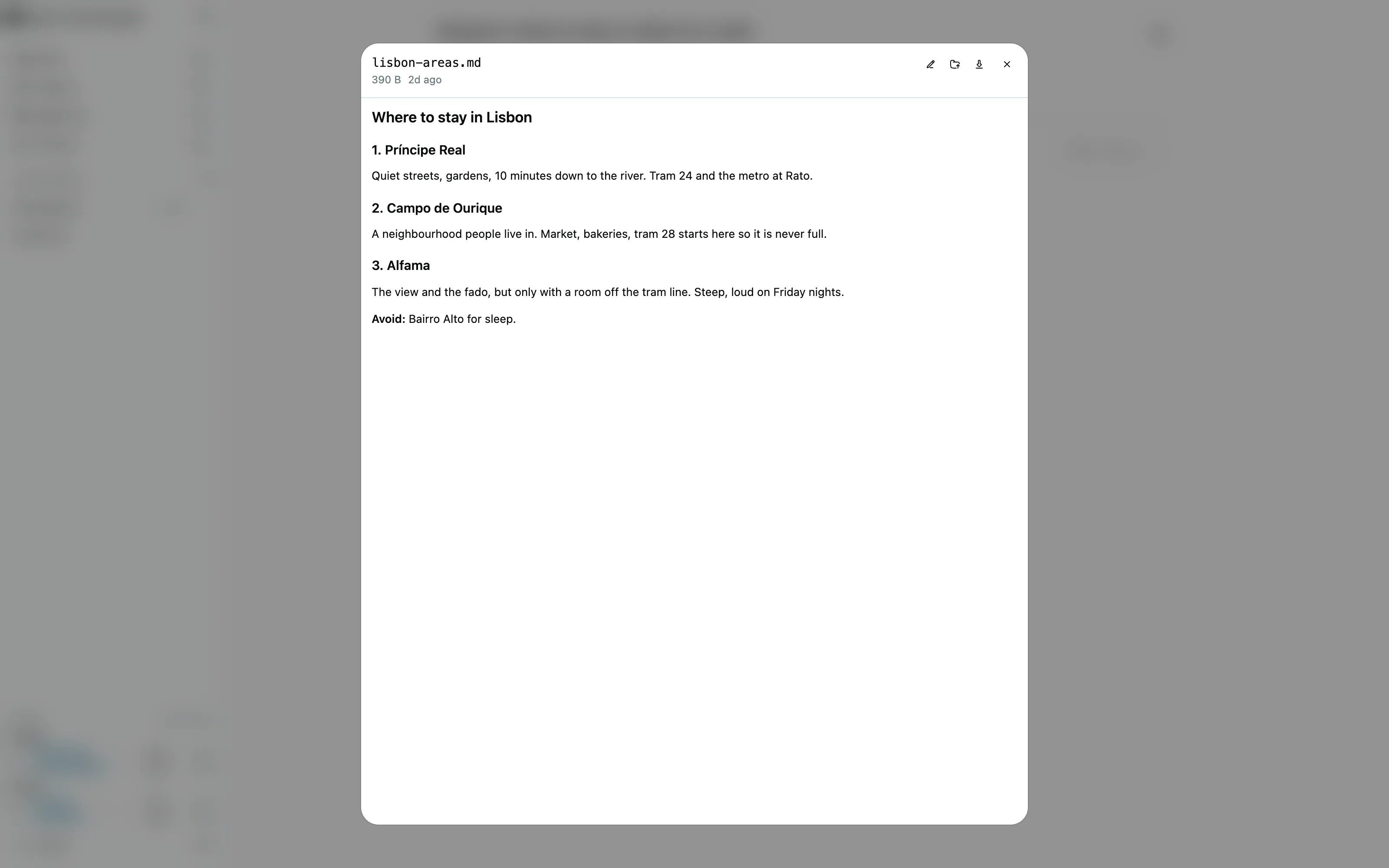
A task does not need a repo. Plan a trip, compare flats, read three libraries and write what to steal. Without a repo the agent gets an empty folder instead of a checkout.
Research runs leave files on the task, and the next run reads them. Connectors to mail and calendars come through Executor, the same for every agent.
What it took
Built in the open, on Effect, with Postgres as the only queue.
merged pull requests
80
From August to September 2026, each one small and about one thing.
providers
3
Claude, Codex and Pi behind one harness.
workspace packages
19
Five apps and fourteen libraries in one Bun monorepo.
test files
188
Repository tests run against a real Postgres.
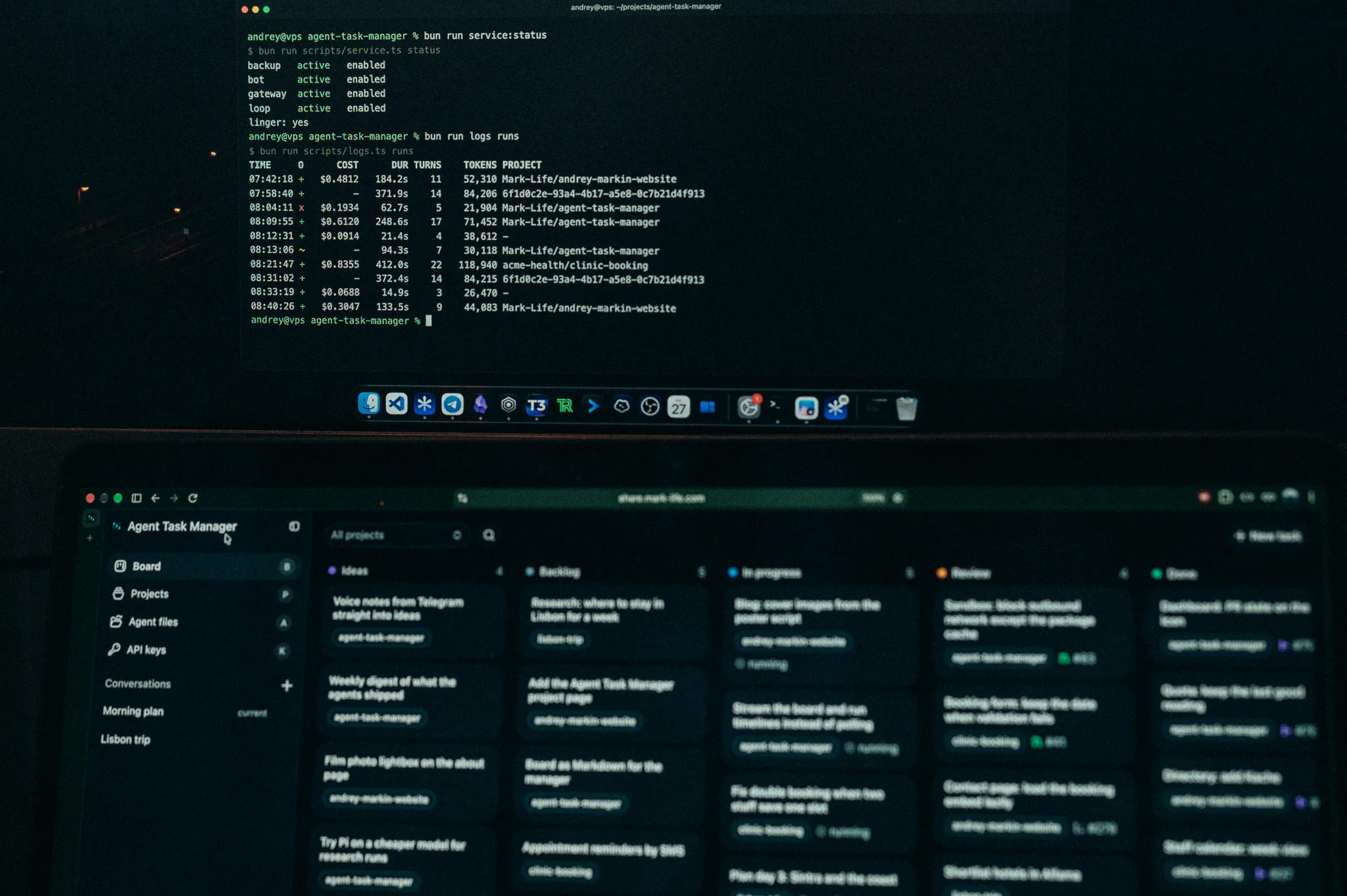
It runs on one machine.
Three processes run it: the loop that starts runs, the gateway the dashboard talks to, and the Telegram bot. One command puts them behind systemd, so they come back after a reboot.
Every night at 03:20 it dumps the database and the files agents left. A second command restores a backup into a scratch database and checks every table.

\ Andrey Markin \
Want agents doing real work on your team's backlog?
A sandbox, a queue and a review gate turn coding agents from a chat window into a team that ships. Tell me how your team works and I'll show you what the factory around it should look like.