\ AI chat app · Author · 2025–2026 \
An AI chat I shipped to the App Store
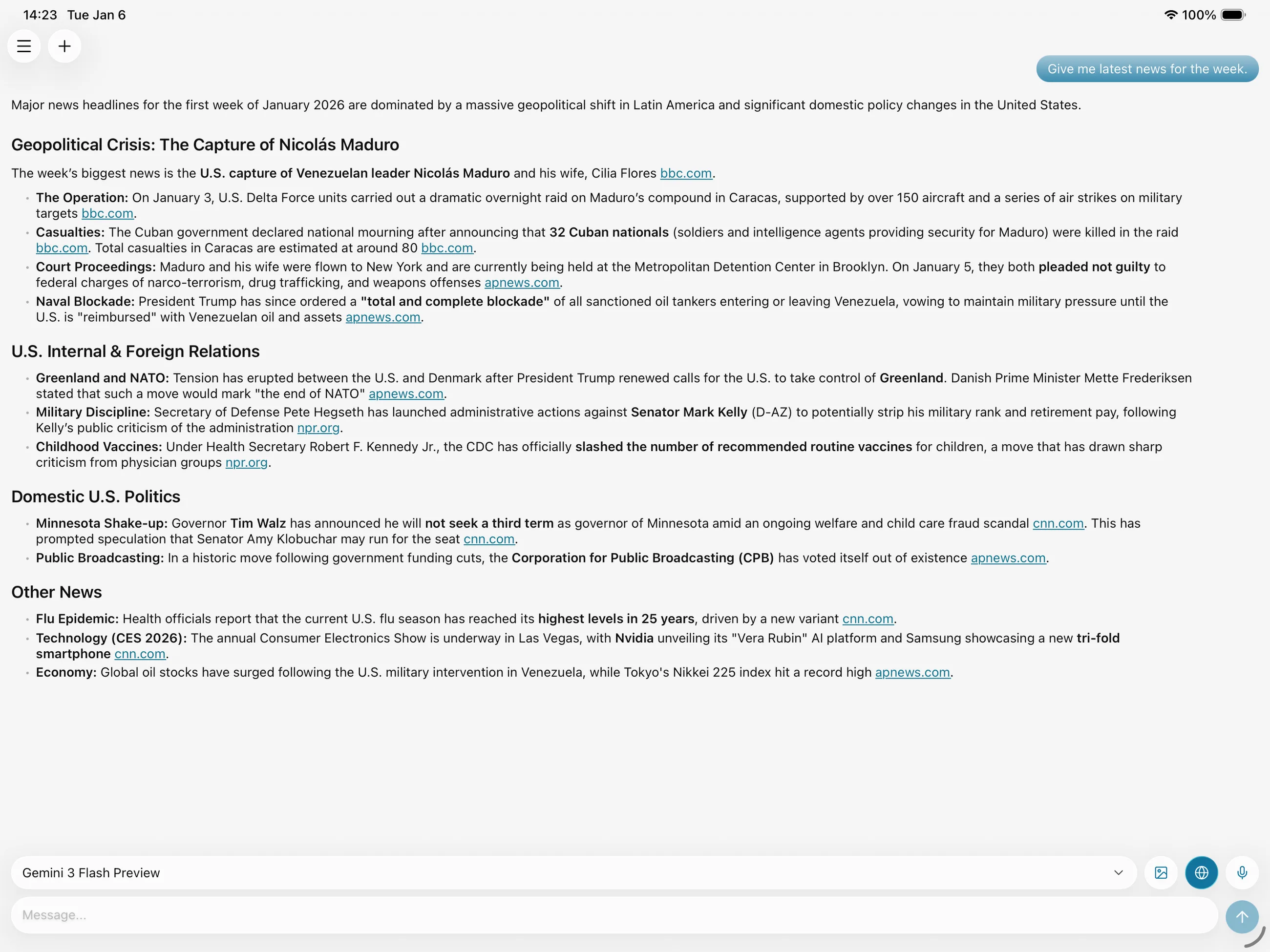
I built Yapmate alone, a web app and an iPhone app on one backend. The hard parts were streamed Markdown on iOS and chats where several people talk to one model.
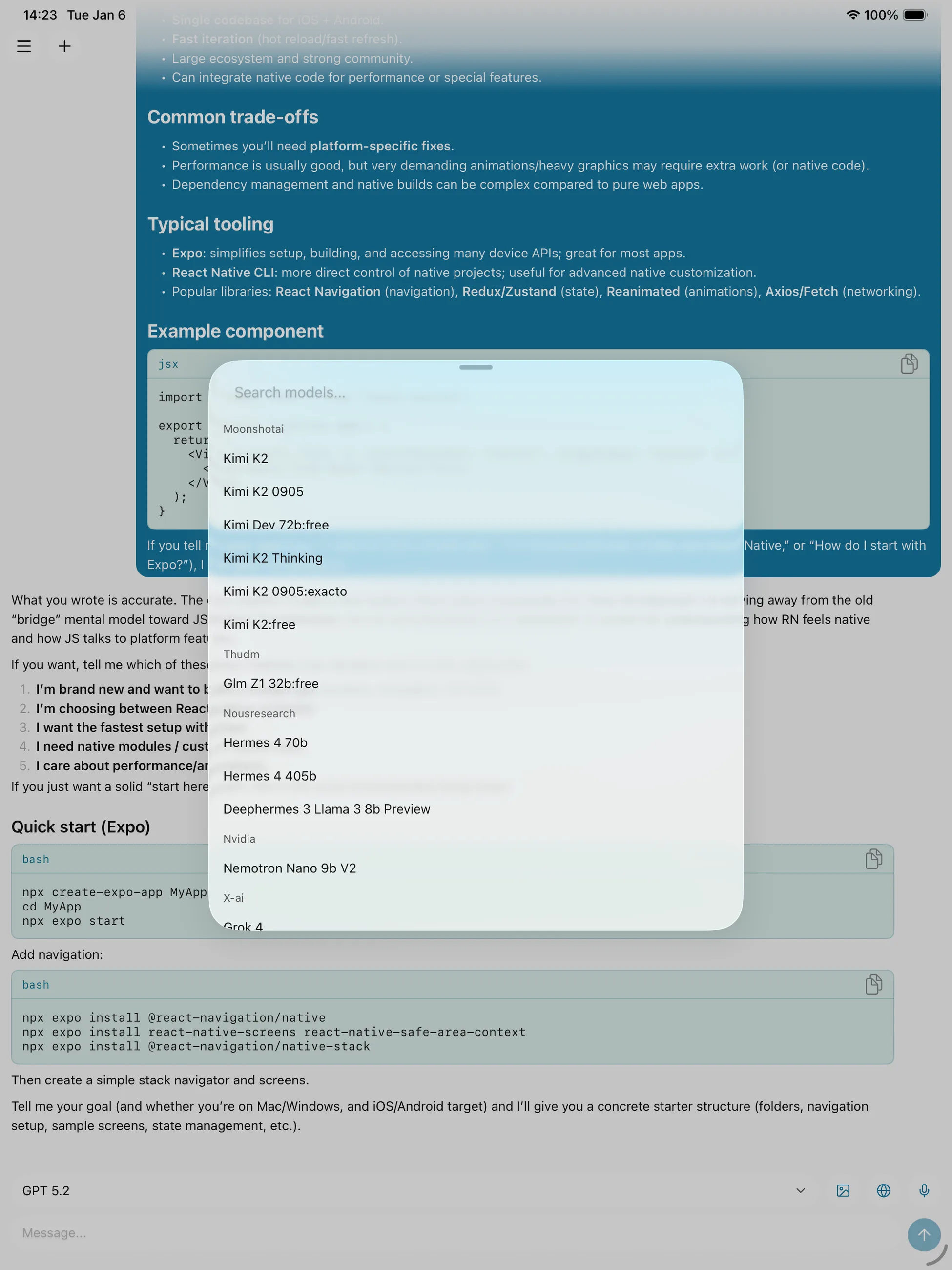
Every model in one chat
One chat app for iPhone, iPad and the web, with every major model in the same list.
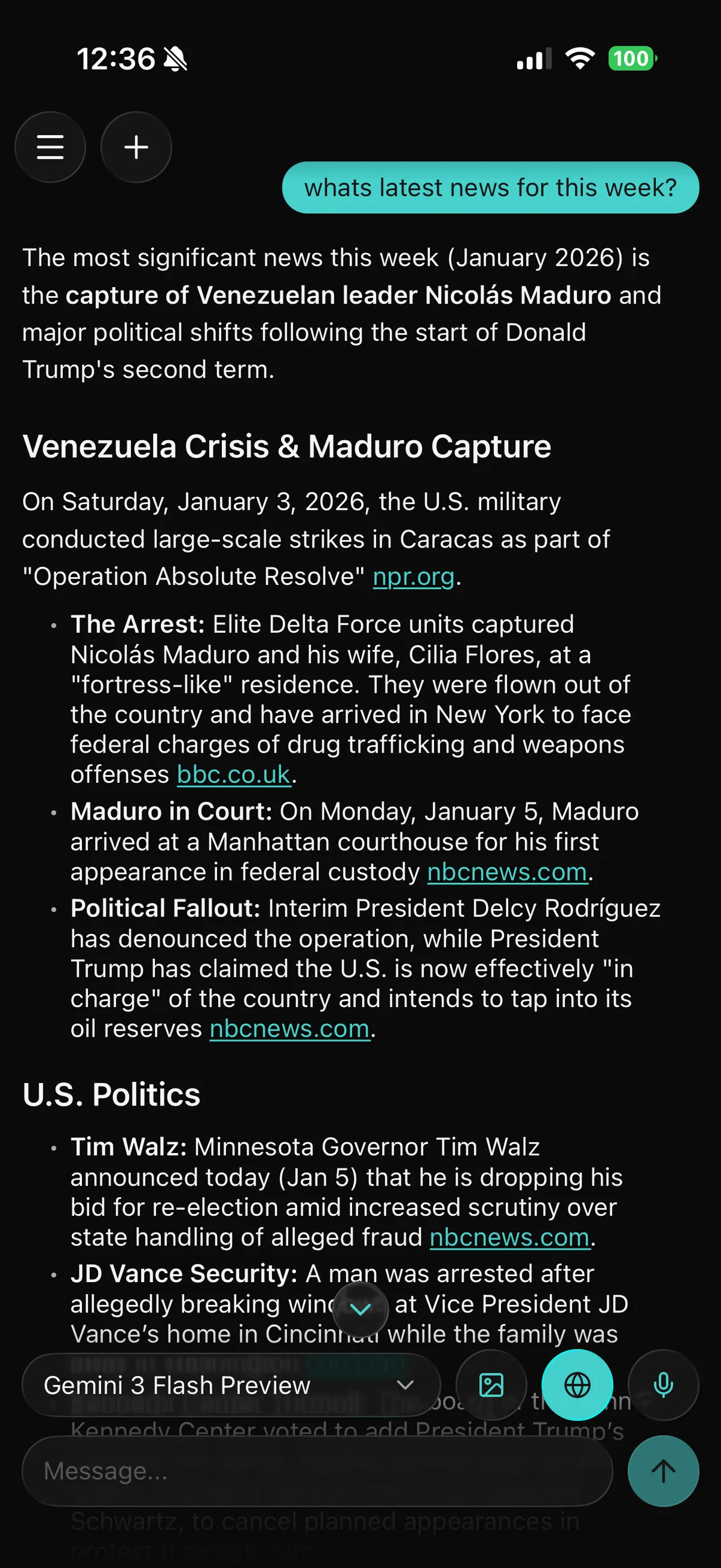
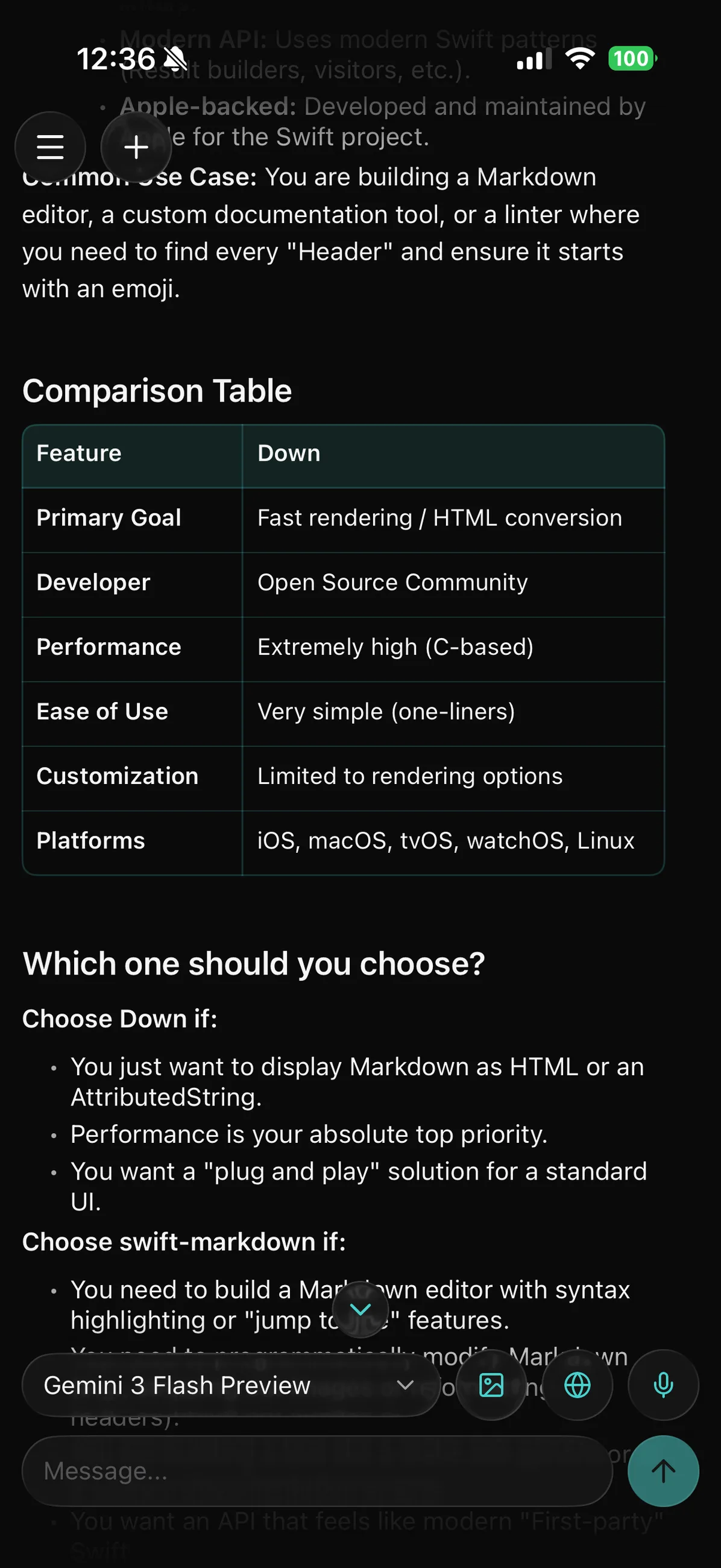
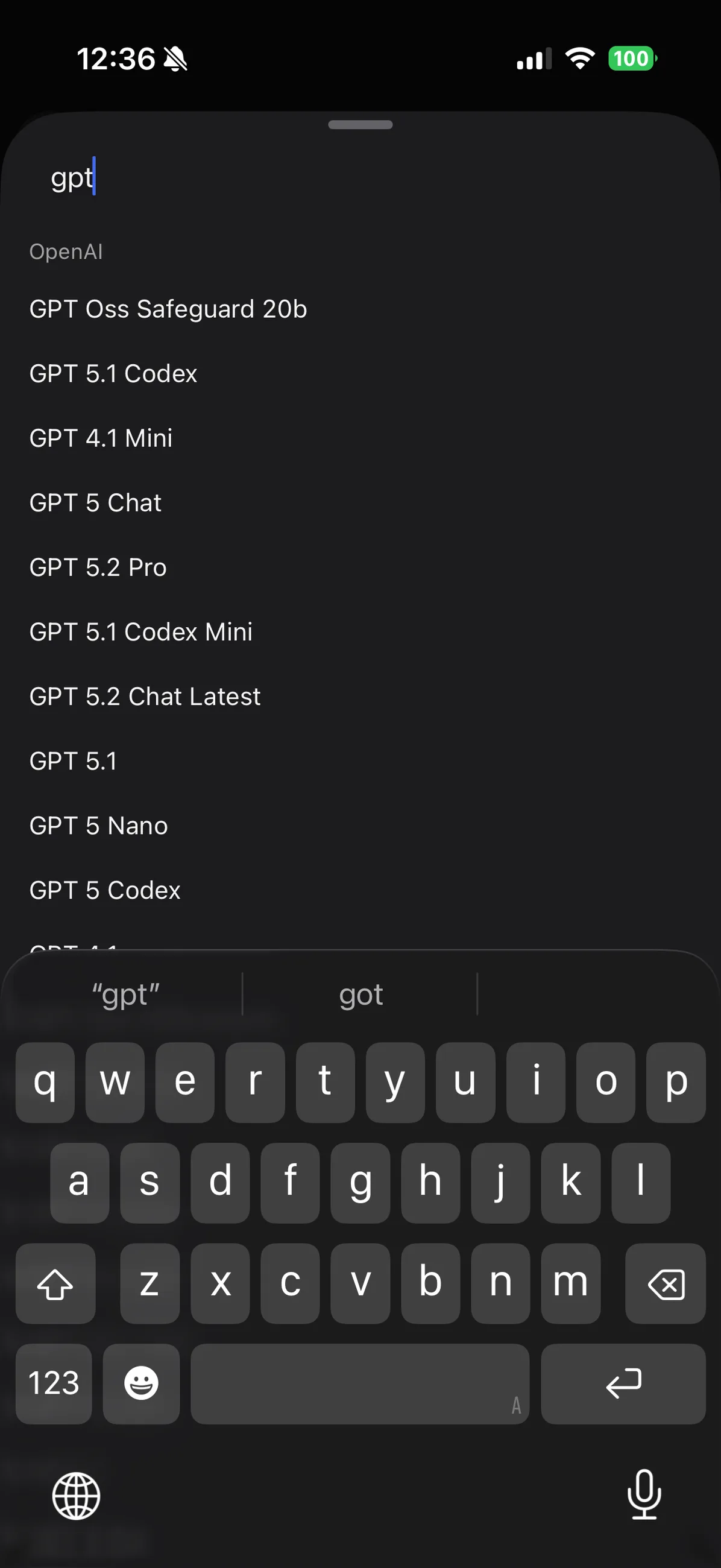
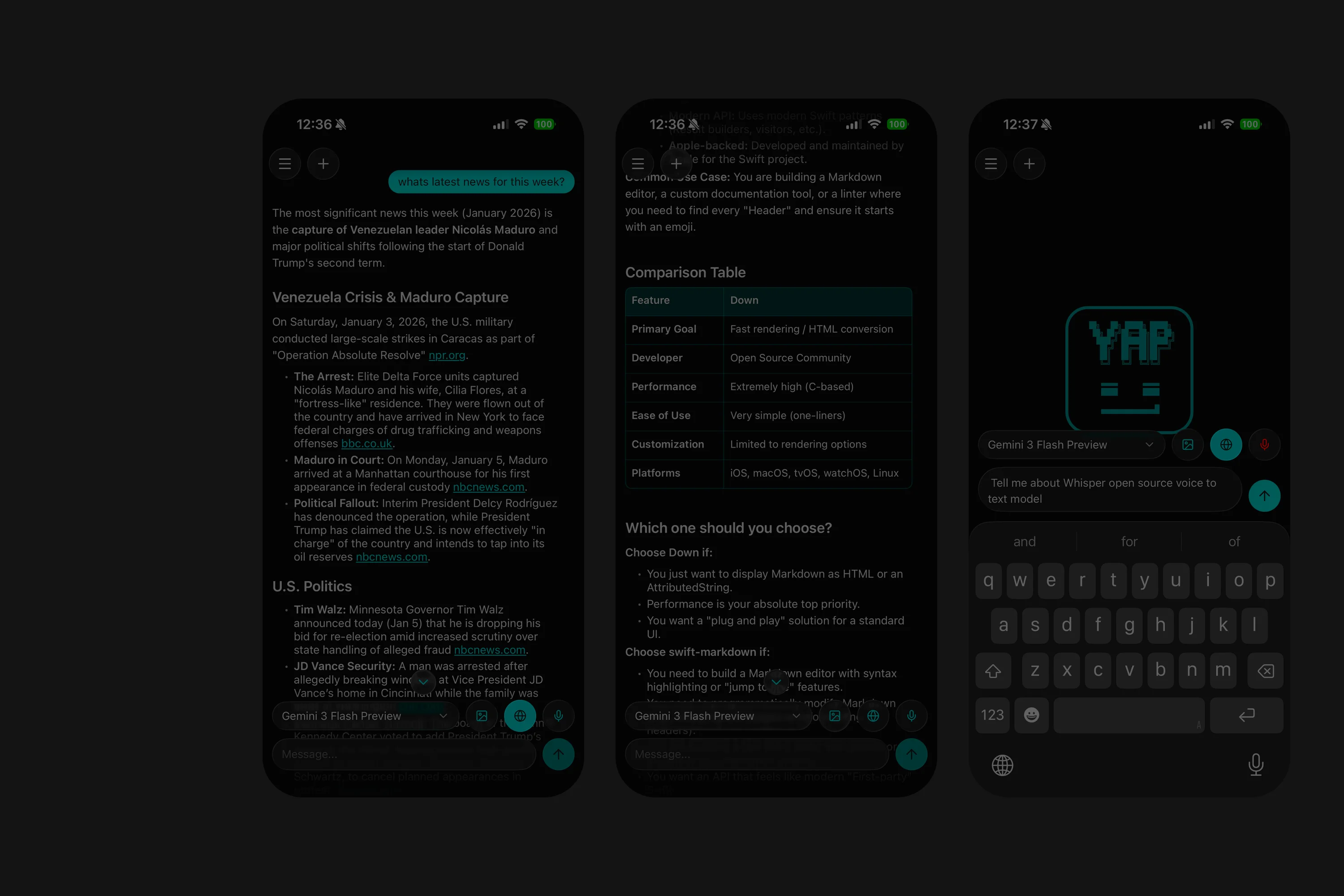
Yapmate puts GPT, Claude, Gemini, DeepSeek, Mistral and the rest behind one model picker. The models come through OpenRouter, so a new one shows up in the list without a release.
I built the web app first, in December 2025, and started the iPhone app a week later. Both talk to the same Bun server and share their types through oRPC, so a chat you start on the laptop is waiting on the phone.
voice
Whisper
Tap the mic and talk. Groq runs Whisper on the recording and writes the prompt.
tools
MCP
Add your own MCP server. Its URL is checked against private networks, and each tool call waits for your yes.
memory
Supermemory
With memory on, the model saves facts about you and finds them again in a later chat.
plans
$7 / $15
Two monthly plans through Stripe Checkout, paid on the web.
Streaming Markdown, drawn in Swift
Long streamed answers crashed the iPhone app. I moved the Markdown out of React and into UIKit.
React only sends a string now.
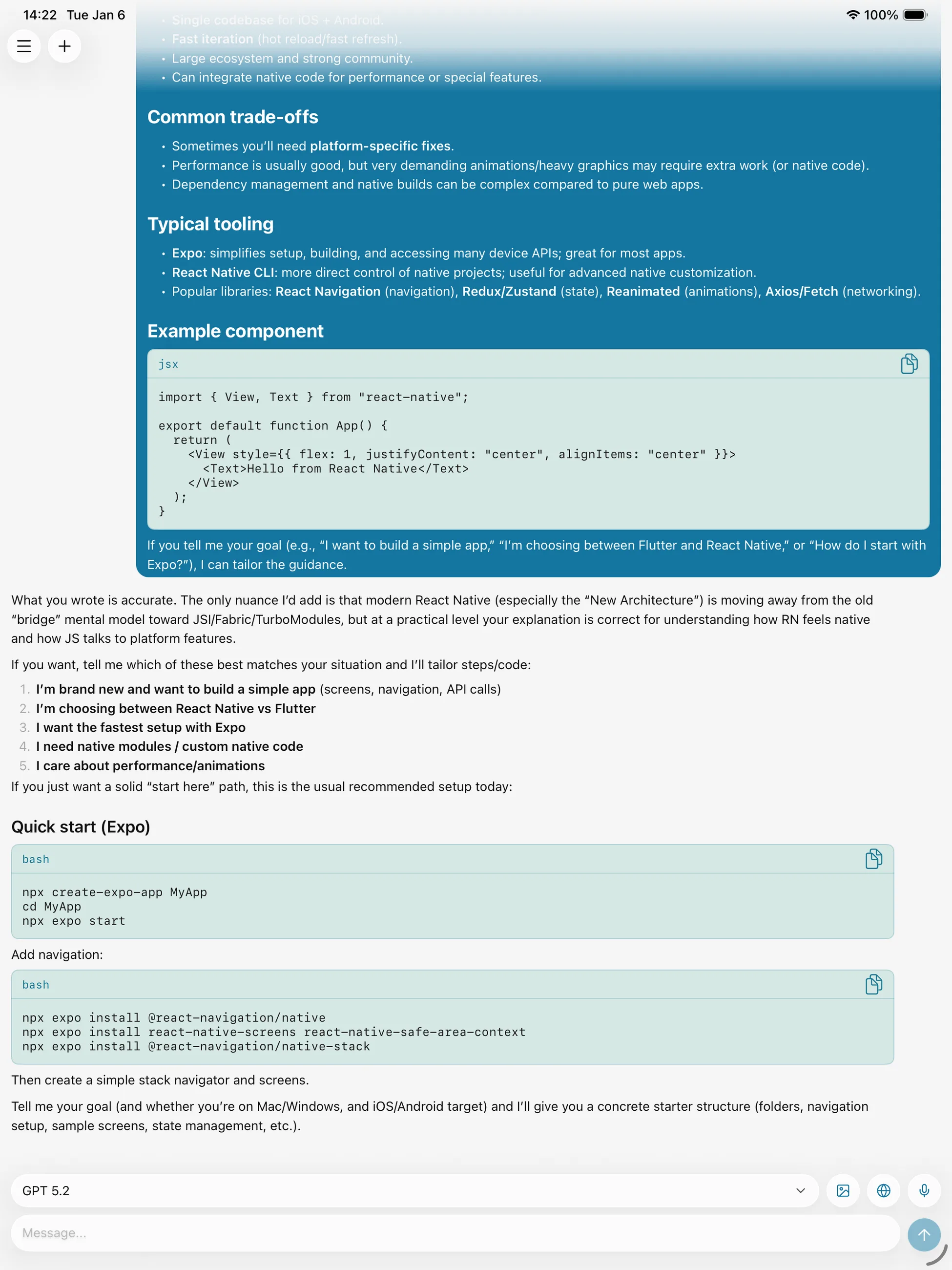
The first iPhone build drew Markdown in JavaScript. Each streamed chunk made marked build a fresh set of tokens, React re-rendered the whole message, and long answers crashed the app.
I tried memoizing, a different Markdown library and throttling the updates. None of it held up, so on 6 January I wrote an Expo native module in Swift.
Down, a Swift wrapper around cmark, parses the text into a UITextView. Code blocks get a copy button, tables scroll sideways, and both are plain UIKit views. It still re-parses the whole message on every chunk, but there's no React tree left to rebuild.
before: every chunk in javascript
chunk arrivesjs
A few more words.
marked.lexerjs
A fresh set of tokens, so memo never hits.
react re-renderjs
The whole message tree, every time.
long answerjs
The app slows down, then crashes.
after: one string crosses to swift
remendjs
Closes half-streamed syntax, like a lone **, so the text parses.
splitswift
One regex cuts the text into prose, code and tables.
uikit viewsswift
Down + UITextView, CodeBlockView, TableBlockView.
height → jsswift
The view measures itself. Layout passes skip changes under 1pt.
swift
func setContent(_ markdown: String) {
  // Clear existing views
  stackView.arrangedSubviews.forEach { $0.removeFromSuperview() }

  for segment in parseMarkdownSegments(markdown) {
    switch segment {
    case .text(let text):
      let textView = TextSegmentView(
        styler: styler,
        customTextColor: customTextColor
      )
      textView.setMarkdown(text)
      stackView.addArrangedSubview(textView)

    case .codeBlock(let language, let code):
      let codeView = CodeBlockView(code: code, language: language)
      stackView.addArrangedSubview(codeView)

    case .table(let tableData):
      let tableView = TableBlockView(
        tableData: tableData,
        customTextColor: customTextColor,
        useBackgroundColor: !isUserMessage
      )
      stackView.addArrangedSubview(tableView)
    }
  }
}
Native where you touch it
Glass on iOS 26, the system menu on long-press, and Apple's own model for guests.
On iOS 26 the header buttons, the input and the sheets use Liquid Glass through expo-glass-effect. The app checks once at launch, and older phones get a plain bordered view instead.
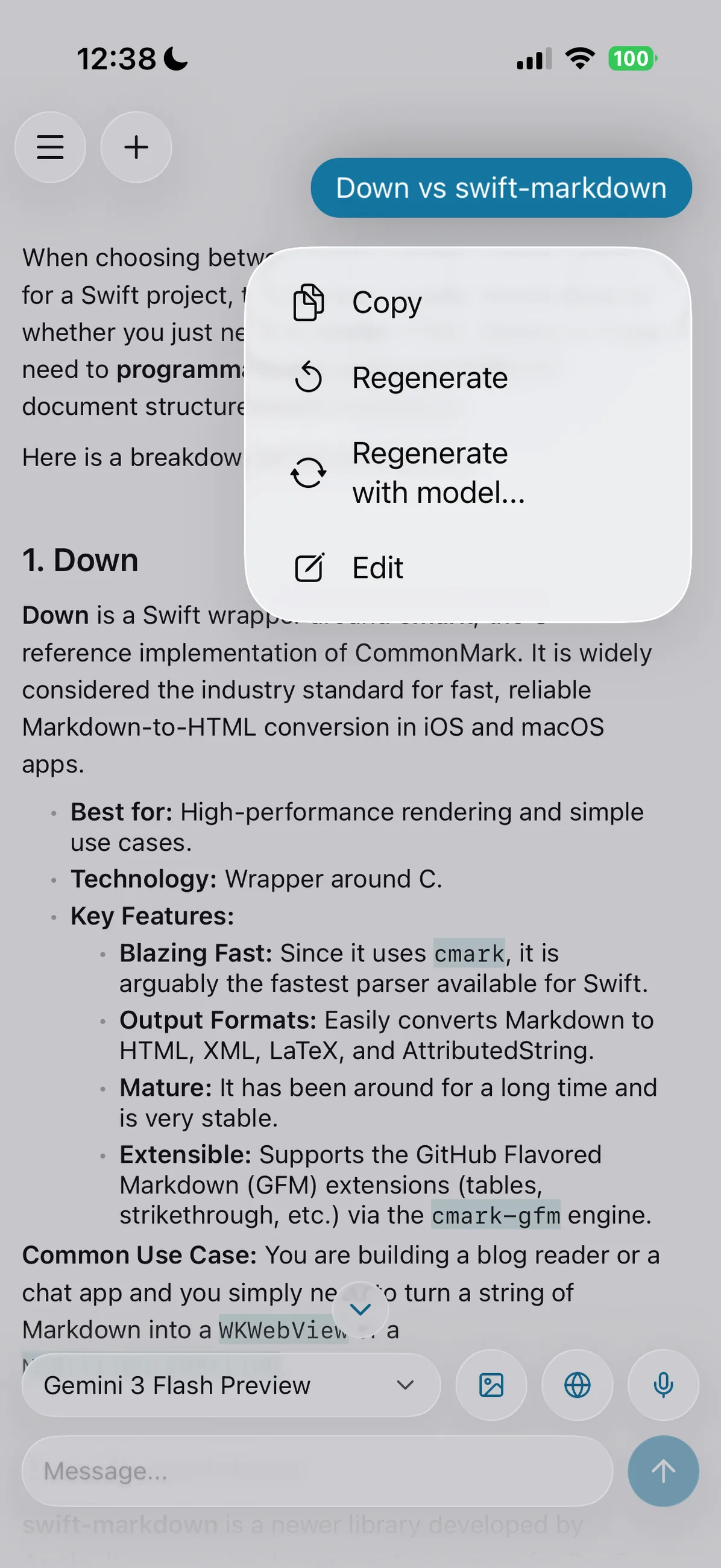
Long-press a message and the native iOS menu opens: copy, regenerate, regenerate with another model, edit. The menu lives in the Swift view and hands the choice back to React as an event.
You can chat without signing in: on phones with Apple Intelligence, guests talk to Apple's on-device model, so the first message needs no account and never leaves the phone.
One model, several people
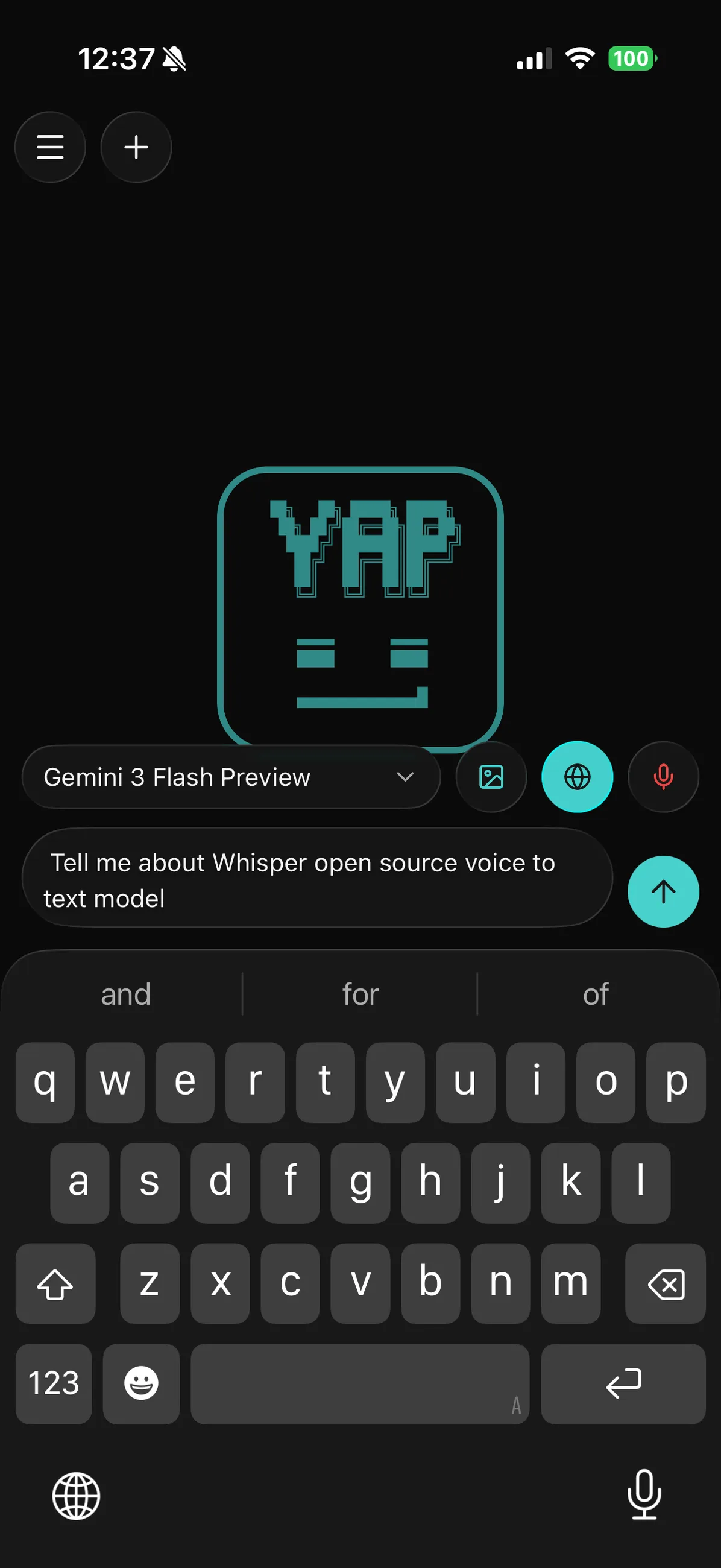
Several people and one model in the same chat, with the answer streaming to everyone at once.
A chat can hold several people and one model, and everyone in it sees who's online and who's typing. Invite links expire after 24 hours.
The model gets each message as [Name]: text, plus a short system prompt about that format, so it answers people by name. In the video it greets Andrey and Matt.
Every chunk of an answer goes into a Redis list first and is published second. Someone who joins late or refreshes reads the list, then follows the live channel, and the answer keeps generating if its author closes the tab.
ts
export const publishStreamChunk = async (
  streamId: string,
  chunk: StreamChunk
): Promise<void> => {
  const bufferKey = `stream:${streamId}:buffer`;
  const channel = `stream:${streamId}`;
  const payload = JSON.stringify(chunk);

  // Sequential: buffer first, then broadcast (prevents race condition where
  // late joiners receive publish before chunk is in buffer)
  await redis.send("RPUSH", [bufferKey, payload]);
  await redis.publish(channel, payload);
};
Driven from the keyboard
13 shortcuts on the web. Press one here and its row lights up.
The web app is built for the keyboard: 13 shortcuts cover a new chat, the prompt, the model picker, web search, tools, memory and reasoning depth, and they work while you're typing.
One object holds every combo, and both the key bindings and the cheatsheet read from it, so a label can't drift from its key. mod turns into ⌘ on a Mac and Ctrl everywhere else.
ts
// use-hotkeys-config.ts
export const HOTKEYS = {
  newChat: "mod+j",
  focusPrompt: "mod+k",
  // ...
  toggleMemory: "mod+alt+v",
} as const;

// chat-input.tsx
useHotkeys(
  HOTKEYS.toggleMemory,
  (e) => {
    e.preventDefault();
    if (supportsTools) {
      onMemoryEnabledChange(!memoryEnabled);
    }
  },
  { enableOnFormTags: true }
);

// hotkeys-cheatsheet.tsx
{ action: "Toggle memory", hotkey: HOTKEYS.toggleMemory },
\ press one, or tap a row \
navigation
chat input
Shipping it to the App Store
Eleven weeks of commits by one person, from the first web chat to an app on the store.
commits
407
From 19 December 2025 to 8 March 2026. 392 of them landed in the first six weeks.
lines of Swift
1,412
Three files: the Markdown view, the table view and the module definition.
lines of TypeScript
60k
Web, mobile, a Remotion video app and five shared packages in one Bun monorepo.
days
5
From expo init on 26 December to the App Store submit config on 31 December.
from the git log
19 Dec
First commit. The web chat comes first.
26 Dec
expo init. The iPhone app starts.
31 Dec
EAS submit config for the App Store.
6 Jan
Markdown moves into Swift.
13 Jan
Shared chats with invites.
17 Jan
Apple's on-device model for guests.
20 Jan
On the App Store.
8 Mar
Last commit.
Five days from expo init to a submit config.
One config file builds three variants: development, preview and production. Each gets its own bundle id, name and URL scheme, so all three sit on one phone and a magic link opens the right one.
EAS builds and submits straight from the Bun monorepo, with a pre-install script that installs the whole workspace first. One script, bun run air, sends small fixes over the air to the production channel, with no new store review.
The app was on the App Store by 20 January 2026. Yapmate is closed now and no longer on the store.

\ Andrey Markin \
Have an iOS app that needs to ship?
I went from expo init to an App Store submit config in five days, then wrote Swift where React Native was too slow. Tell me what your app has to do and I'll tell you what it takes to get it on the store.